




How do we continue in faith when life takes us along a path we did not choose?
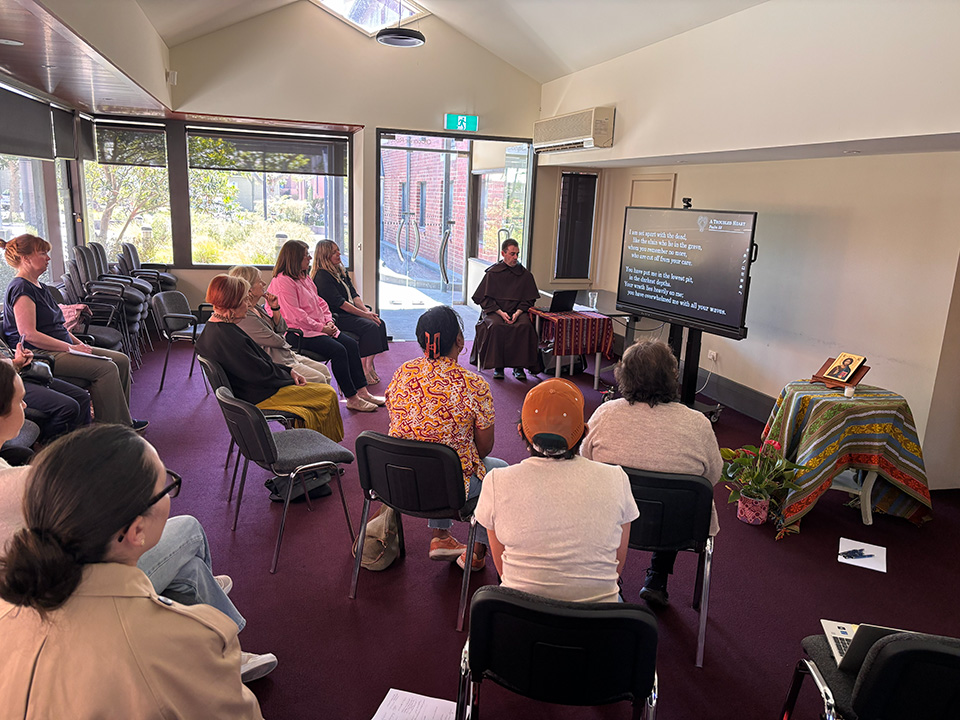
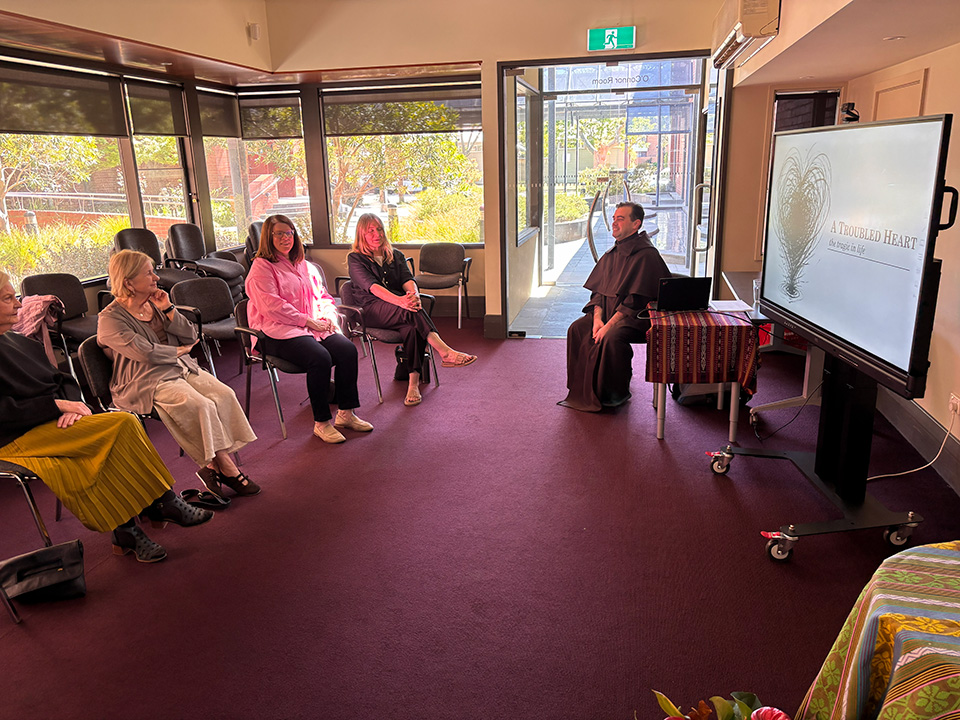
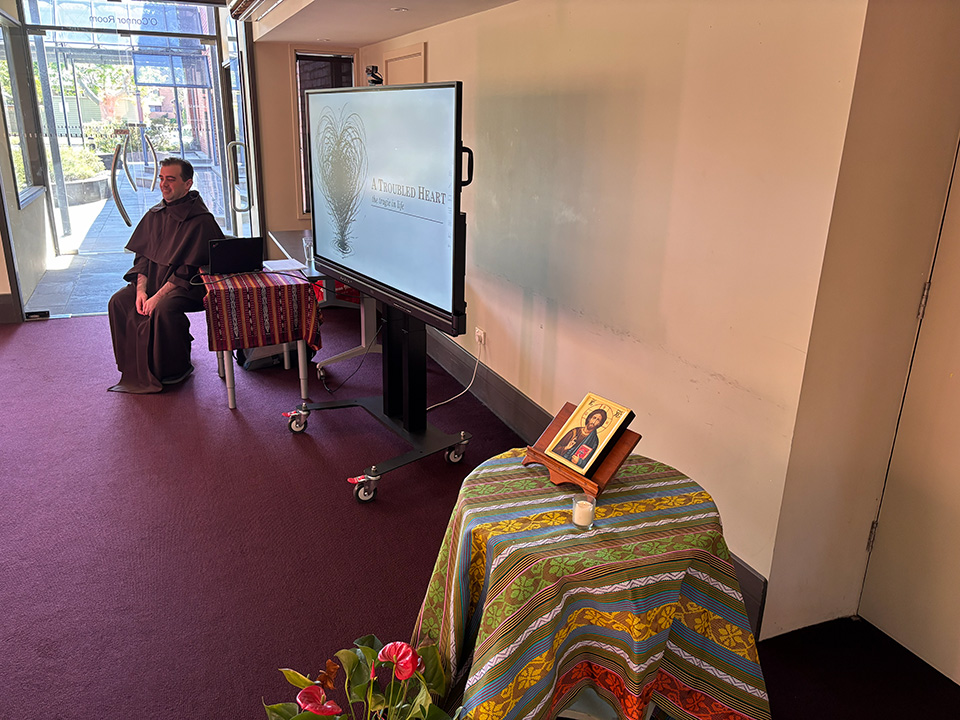
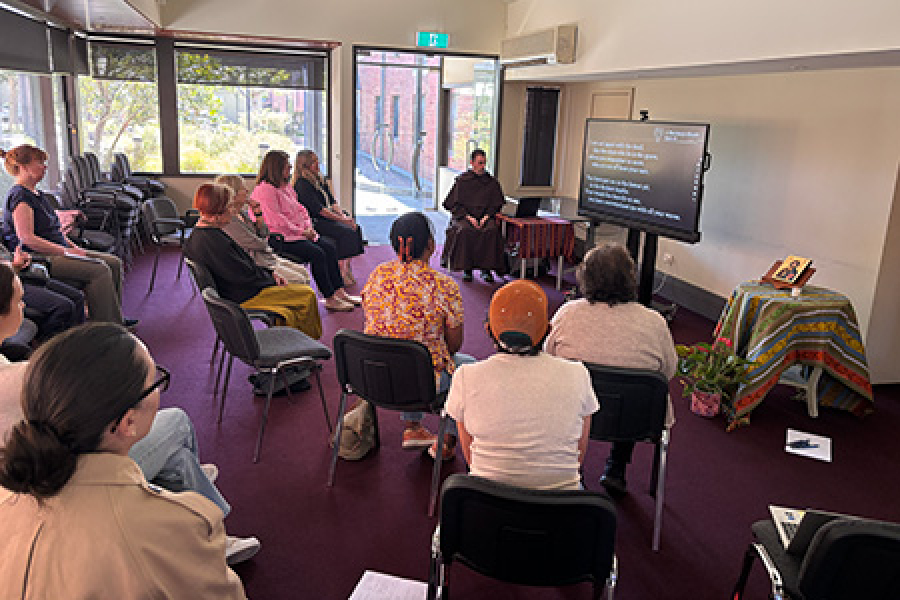
This question was at the heart of the Carmelite Conversations gathering held at the Carmelite Centre in Middle Park, Melbourne, on Saturday 17 October. Facilitated by Fr Matthew Tonini O.Carm., A Troubled Heart: The Tragic in Life explored how the Carmelite tradition can accompany us through suffering, loss and uncertainty.
Drawing on Fr John Welch’s Seasons of the Heart, Fr Matthew brought together Scripture, art and the experiences of Carmelite saints to reflect on those times when God’s presence can be difficult to recognise. The conversation acknowledged the questions that arise when familiar certainties fall away and prayer itself becomes a struggle.
The story of Elijah offered a starting point. Afraid and exhausted, Elijah retreats into the wilderness, where he receives food, rest and the care he needs to continue his journey. Later, at Mount Horeb, he encounters God in sheer silence. His experience opened a reflection on the unexpected ways God meets us when we reach the limits of our own strength.
Participants also reflected on Psalm 88, whose words give voice to anguish and a profound sense of abandonment. Alongside Mary’s sorrow and Jesus’ prayer in Gethsemane, the psalm offered a reminder that grief, fear and unanswered questions have a place within the life of faith. They can be brought honestly into prayer.
The lives of Teresa of Avila, John of the Cross and Thérèse of Lisieux deepened this exploration. Each knew struggles that challenged their sense of God’s nearness. Their witness speaks to the patience and trust needed when the way forward remains unclear, and to a love that continues to hold us even when we cannot feel its presence.
Fr Matthew’s reflections on John of the Cross emphasised a loving attentiveness in the darkness: remaining open to God, resisting the urge to force an explanation, and continuing to love in the circumstances before us.
The witness of Edith Stein and Titus Brandsma brought the conversation into the suffering of the twentieth century. In particular, Titus’ prayer during imprisonment revealed the solace he found in Christ while facing the reality of his own suffering and death.
Throughout the session, care for those reflecting on painful experiences remained central. Fr Matthew encouraged gentleness towards oneself and reaching out to someone trusted when support is needed. As his notes expressed it, “Christ often has a human face of compassion.”
The gathering concluded with practical encouragement for living through a troubled season: nurture patience, offer the darkness as prayer, find expression through writing, seek the company of a spiritual friend, and choose the next loving thing.
These simple invitations gave everyday expression to the hope running through the conversation: even when we cannot understand what we are experiencing, we can remain open to God’s companionship and to the love offered through one another.